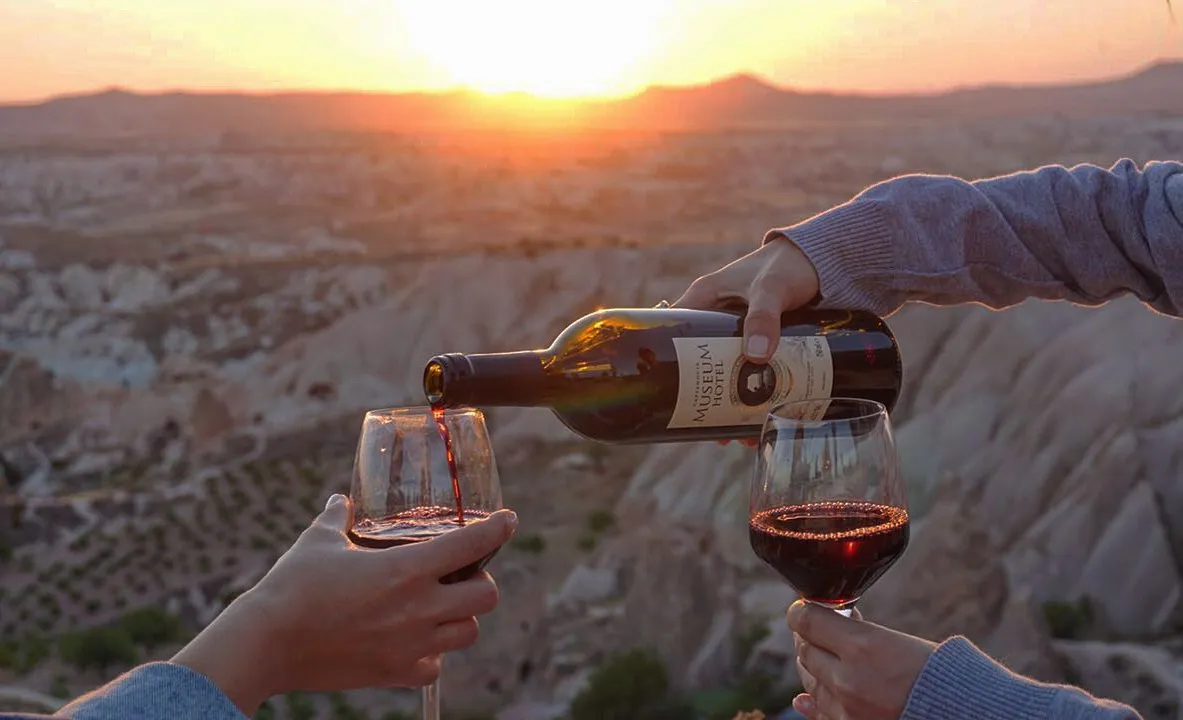
Wine Tasting in Ancient Caves
Cappadocia has made wine for 4,000 years, and local wineries still age it in underground cave cellars where the temperature stays constant. Tastings feature wines from grapes grown in volcanic soil, including the native Emir and Narince varieties.
Cappadocia has made wine for 4,000 years, and local wineries still age it in underground cave cellars where the temperature stays constant. Tastings feature wines from grapes grown in volcanic soil, including the native Emir and Narince varieties.
What You'll Experience
- Volcanic soil wines
- Cave winery atmosphere
- Local grape varieties (Emir, Narince)
- Food pairings with local cheeses
- Learn about ancient winemaking
Why This Matters
Crafts here have long local roots. Byzantine monks painted the cave churches, and Ottoman-era potters settled along the Kızılırmak river in Avanos, where workshops still use the same red clay today.
Who Should Visit
Visitors interested in crafts and religious history will find plenty here. Pottery workshops in Avanos take walk-ins for short lessons.
First-time visitors and solo travelers both manage easily here. The main villages are small, and tour operators handle transport between sites.
The Local Context
Cappadocia's terrain comes from three ancient volcanoes, and people have lived in it for over 4,000 years. The region is a UNESCO World Heritage site, protected for both its geology and its rock-cut architecture.
Hittites, and later Byzantine monks escaping persecution, carved homes, churches, and whole cities into the soft rock. Medieval frescoes and modern cave hotels now sit in the same valleys.
Pottery makers in Avanos work with clay from the local river, and many balloon pilots have flown here for decades. Family-run guesthouses often occupy homes their owners' grandparents built.
What You Need to Know
- Try native Turkish grape varieties
- Ask about food pairings
- Book sunset tastings for ambiance
- Bring light jacket for cool caves
- Consider buying bottles to take home
What's Nearby
Local restaurants serve regional dishes such as testi kebab, often in cave dining rooms. Carpet and pottery shops sell handmade work; ask how a piece was made before you buy.